
Common Name: rust
Scientific Name: Puccinia spp
Host Turfgrass: Kentucky bluegrass, tall fescue, St. Augustinegrass, zoysiagrass
Rust is a lawn disease caused by the fungus Puccinia spp. Rust affects many different species of turfgrasses throughout the United States and damage is most common during the summer and fall months.
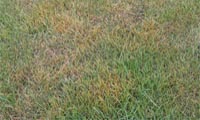
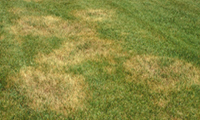
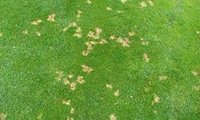
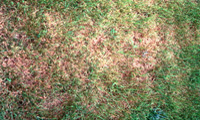
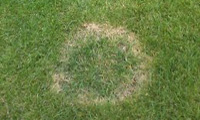
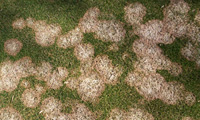
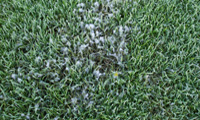
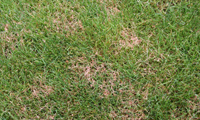
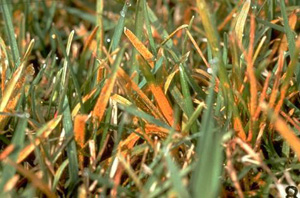
Early symptoms include small, yellow flecks that develop on the leaves and stems. The flecks expand over time into raised pustules, orange or red in color, that rupture to release powdery masses of yellow, orange, or red spores. Infected plants become yellow and are more susceptible to environmental stress. Heavily infected areas become thin and exhibit clouds of orange dust (rust spores) when the foliage is disturbed. The rust pustules on infected leaves turn black during the fall in preparation for overwintering.
Disease control practices by the homeowner can create favorable conditions for a healthy lawn, and often create unfavorable conditions for the growth of Rust. Reducing thatch with core aeration, reducing shade, watering deeply and infrequently and avoiding watering at night can help create unfavorable conditions for Rust. Environmental conditions cannot be changed, but cultural practices performed by the homeowner can be modified to lessen the chance of extensive damage from Rust. Fowler and Sons can help determine a plan for preventing and controlling Rust in your lawn.


