Other common names:Pythium Root Rot
Scientific Name: Pythium aphanidermatum
Host TurfGrass: bentgrass, bluegrasses, fescues, ryegrasses
Pythium Blight can affect a variety of turfgrass species throughout the United States, although is much more common in the southern states. Pythium Blight damage occurs during summer months in the northern states
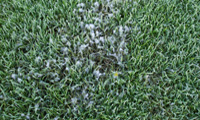
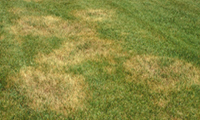
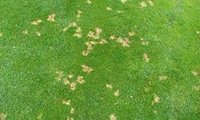
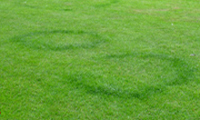
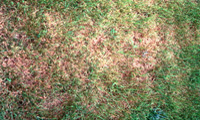
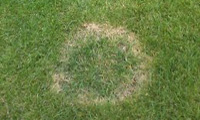
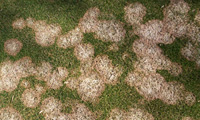
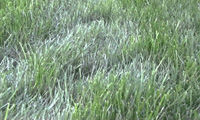
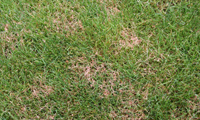
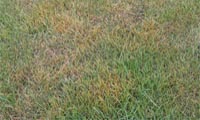
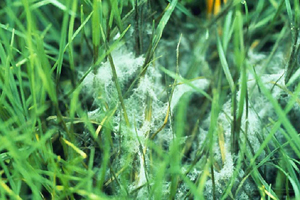
Pythium blight first appears as small, sunken, circular patches up to 1 foot in diameter during hot, humid weather. Leaves within the patches are matted, orange or dark gray in color, and greasy in appearance. Gray, cottony mycelium may be seen in the infected areas when the leaves are wet or humidity is high. The disease spreads rapidly along drainage patterns and can be tracked by equipment. This disease can spread rapidly and cause severe damage to a turf stand very quickly when conditions are favorable for development.
Pythium Blight will appear suddenly during hot, humid weather and is common in the wettest areas of turf and in the surface drainage pattern. It is most severe on immature turfgrass and seedlings and is not commonly found in home lawns.