
Common Name: Fairy Ring
Scientific Name: Basidiomycete Fungi
Host Turfgrass: all species
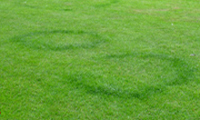
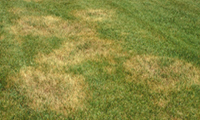
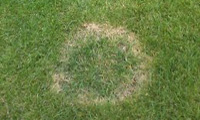
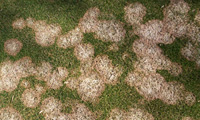
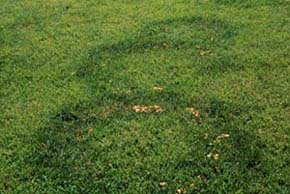
Fairy ring appears in patches, rings, or arcs that are initially 1 foot or less in diameter, but expand in size year after year, reaching up to several hundred feet in diameter in old turf stands. Most fairy ring fungi do not infect or parasitize the turf. Instead, growth of these fungi in the soil can indirectly affect, or even kill, the turfgrass above.
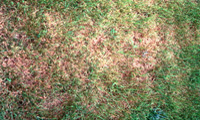
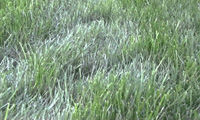
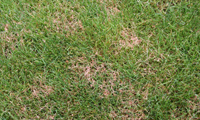
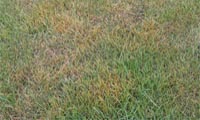
Fairy Ring symptoms vary with the different Fairy Ring responsible for causing the infection. Typically, this disease produces raised rings of grass that are either dark-green or brown in color.
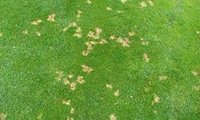
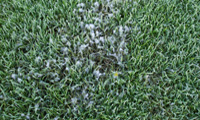
The shape and size of these rings can vary with the particular fungi species causing Fairy Ring and the turfgrass species. Additionally, mushrooms and/or puff balls sometimes occur. Some fungi may produce mushrooms with no rings, and vice versa, some may produce rings and no mushrooms.
Besides being unsightly, fairy rings can cause serious damage to lawns. Often the disease will produce a thick fungal mat that prevents water from reaching the grass roots below. Once the soil becomes dry it is very difficult to wet and the grass roots eventually die. The fungus may also deplete soil nutrients and, in some cases, will release a toxic by-product that can directly kill the turf within a ring.
Disease control practices by the homeowner can create favorable conditions for a healthy lawn that can deter Fairy Ring from developing. Infrequent deep watering is recommended, as opposed to shallow, frequent watering as well as aeration to reduce thatch. Fungicides have NOT proven to be effective. Homeowners will often mask the problem, using fertilizers rich in nitrogen, rather than eradicate it.
To prevent Fairy Ring your mantra should be; fertilize, water, aerate and mow.
If you think your lawn has developed Fairy Ring, give Fowler and Sons a call. We can come out to confirm the identity of the disease and recommend the best action to take care of it.


