
Common Name: Leaf Spot
Scientific Name: Drechslera poae & Bipolaris cynodontis
Host Turfgrass: bluegrasses, bermudagrass, fescues, perennial ryegrass
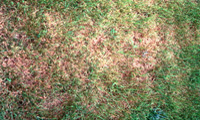
Leaf spot symptoms are expressed in the early stages of the disease, but if left uncontrolled, the pathogen may progress into the basal portions of the plant to cause 'melting out'.
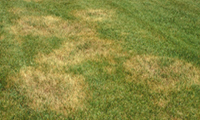
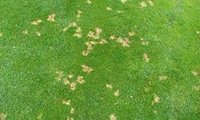
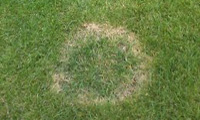
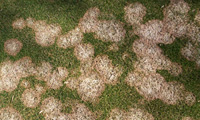
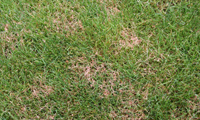
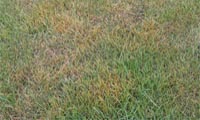
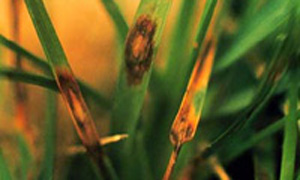
Leaf spot symptoms initially appear as small, brown or black spots or flecks on the leaves or sheaths. As the lesions expand, the center of the lesions becomes tan with a dark brown or black border. The lesions may also be surrounded by a yellow halo. As the lesions expand, they coalesce and cause dieback of entire leaves or plants.
Melting out symptoms appear as a reddish brown rotting of the sheaths, crowns, rhizomes, or stolons which initially leads to wilting, yellowing, or death of the foliage. Symptoms of leaf spot and melting out appear in irregular patterns, although localized 'hot spots' may be more severely damaged than others.
In the bluegrasses, this disease is most active during warm and humid weather, but in bermudagrasses, most damage occurs during cool and wet periods in the fall and spring.
Disease control practices by the homeowner create favorable conditions for a healthy lawn, and often create unfavorable conditions for the growth of Leaf Spot. Increasing the mowing height, avoiding excessive application of fertilizers with water-soluble nitrogen in the spring, minimizing the amount of shade, increasing air flow, and watering deeply and infrequently can all help create unfavorable conditions for the development of Leaf Spot. Environmental conditions cannot be changed, but cultural practices performed by the homeowner can be modified to lessen the chance of extensive damage from Leaf Spot.
Contact Fowler and Sons to help determine a plan for preventing and controlling Leaf Spot in your lawn.


