
Common Name: Necrotic Ring Spot
Scientific Name:Ophiosphaerella korrae
Host Turfgrass: Various bluegrass species and fine fescue
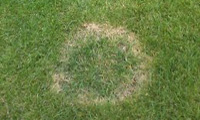
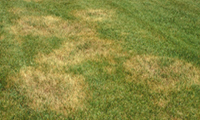
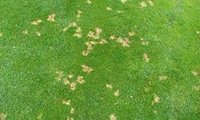
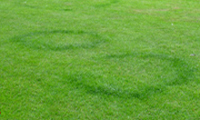
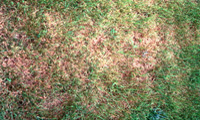
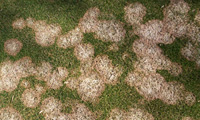
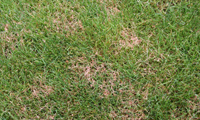
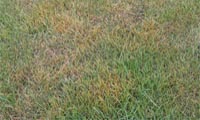
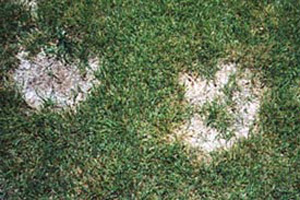
Necrotic Ring Spot produces circular patches with thinning turf that are yellow to light-green in color and 3 to 15 inches in diameter. The patches can grow up to 3 feet in diameter, eventually turning brown and dying. The roots of the infected turfgrass also become thin and weakened, turning from brown to black. The patches often form a "frog-eye" where less susceptible turfgrass species survive inside the patch ring.
Necrotic Ring Spot is often found in areas with a shallow layer of top soil and a hard, rocky layer of sub-soil. Damaged areas of turf will pull-up easily.
Disease control practices by the homeowner create favorable conditions for a healthy lawn, and often create unfavorable conditions for the growth of Brown Patch. The following practices will help to create a healthy lawn and prevent the growth of Necrotic ring:
- Raise lawn mowing height
- Reduce soil compaction and thatch with lawn aeration
- Use fertilizers with moderate to high amounts of phosphorous and potash
- Maintain adequate nitrogen levels using a balanced fertility program
- Reduce the amount of shade in your lawn
- Lightly irrigate in the mid-afternoon to cool plants and avoid drought stress
Contact Fowler and Sons to help determine a plan for preventing and controlling Necrotic Ring Spot in your lawn


